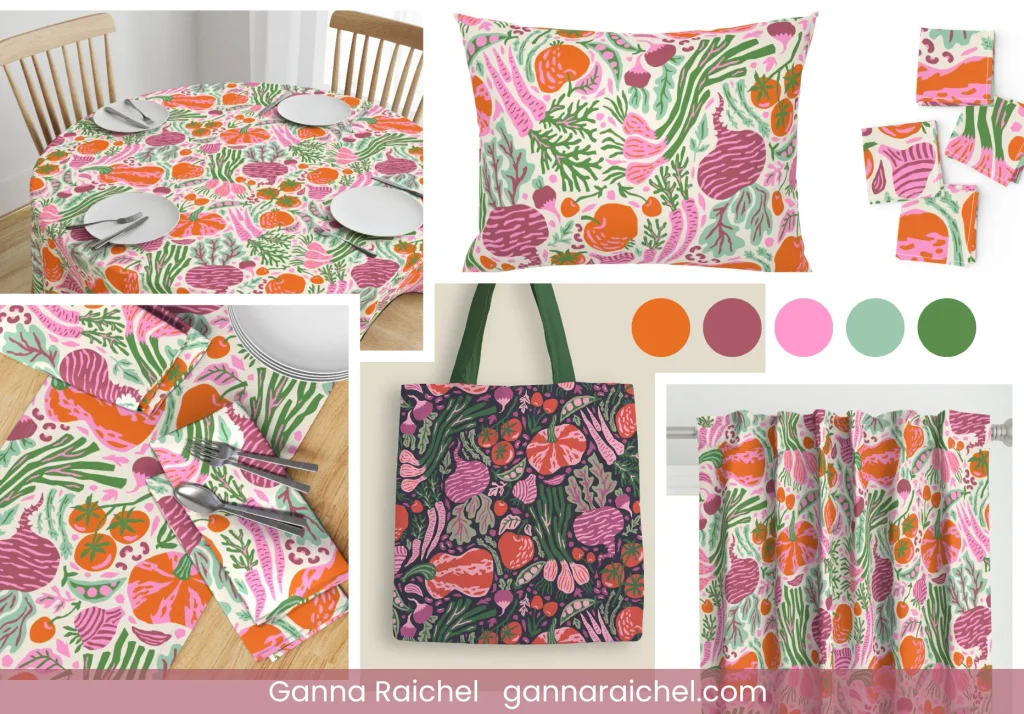
Behind the Scenes of My Spoonflower Award-Winning Design: “Farmers Market” & a Few Words About Borsch
Earlier this year, I decided it would be a good idea to take part in Spoonflower’s weekly design challenges.
Whether I win or not doesn’t really matter. The main thing is to try to create a design based on a pre-determined brief.
It’s kind of like working on commission. Plus, as we all know, having clear guidelines really helps you work more effectively.
So, for this challenge (which was called “Farmers’ Market”), I had to create a playful food illustration (in the form of a seamless pattern, of course).
Something cheerful, inspired either by the aesthetics of a picnic or by sketches of market stalls with seasonal flowers, vegetables, and fruits.
Inspiration
Just like at the start of any design project, I immersed myself in photos of farmers’ markets on Pinterest and Unsplash to find inspiration and figure out exactly what I wanted to draw.
And I wanted to create a print that I myself would want to buy the moment I saw it.
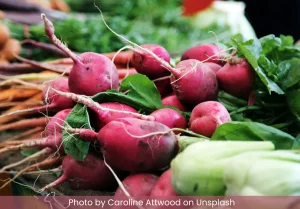
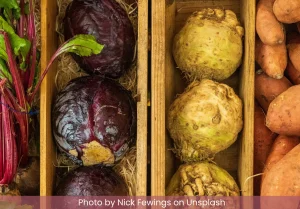
“Character casting”
First, I narrowed down the list of potential “characters” for the print. I decided not to include flowers or everyday scenes from the farmers’ market. A simple, minimalist flat-lay of vegetables and fruits. I wanted it to be bright, bold, and vibrant.
How I choose a color palette
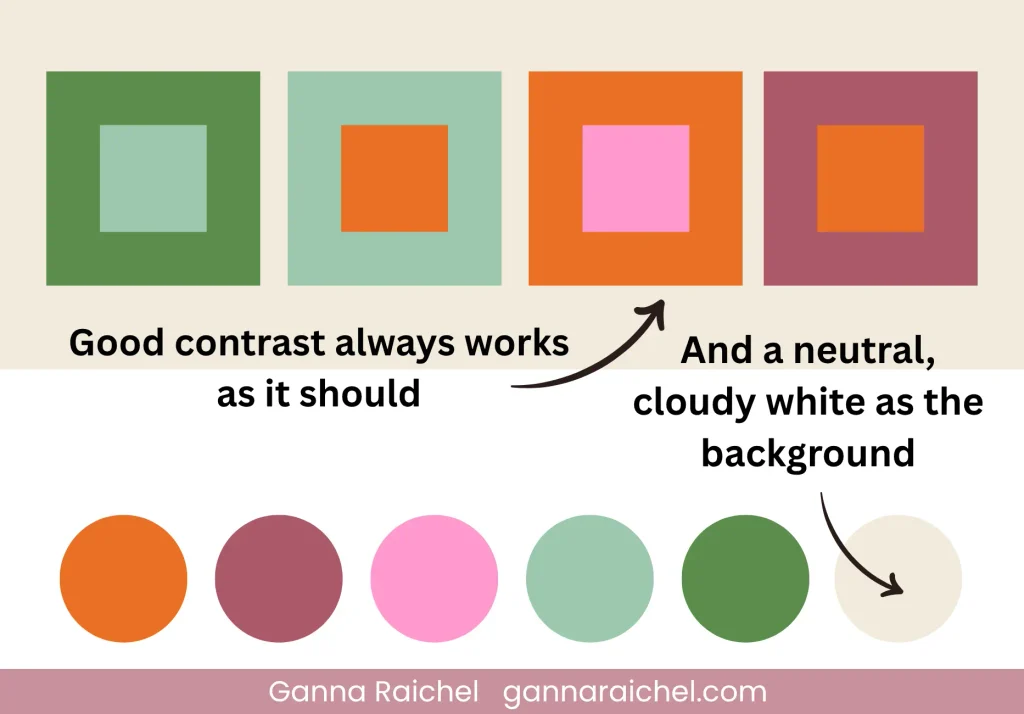
So, since the number and variety of “characters” were still quite high, I decided to choose a fairly limited
color palette so that everything would be harmonious and cohesive.
I realized that I wanted to use shades of green—both dark and light—along with their complementary colors: red, pink, and warm purple (which, moreover, were supposed to contrast with each other—pink being the lightest, red the medium, and purple the darkest of the three).
Making a manual pattern repeat
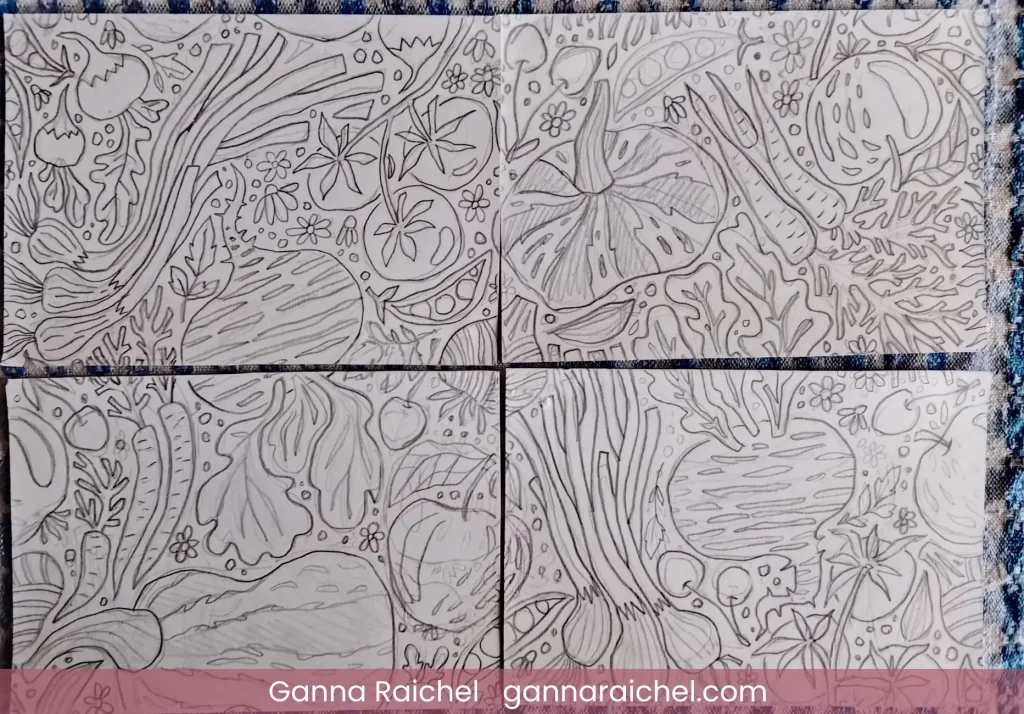
The next step was simply to sit down, relax, and fill a sheet of paper with fruits and vegetables. This is just a rough sketch, to warm up.
After that comes the most interesting and most important part. Creating a manual repeat.
That is, first, by drawing freely, I explore exactly how I’ll stylize my “characters”
In the second step I create a full-fledged composition from my motifs. Here, they immediately interact with one another, singing and echoing through their shapes and textures
And so, I create a complete repeating pattern at this very stage, playing around with cutting the sheet into four parts and arranging them with different sides facing each other until a beautiful and completely SEAMLESS pattern emerges
The best tutorial on creating repeatable patterns by hand that I’ve ever seen is this one, by Swedish artist and designer Sanna Isoletto
(it’s not an affiliate link; I’m just recommending this class because I really liked it)
Digitizing my layout in Adobe Illustrator
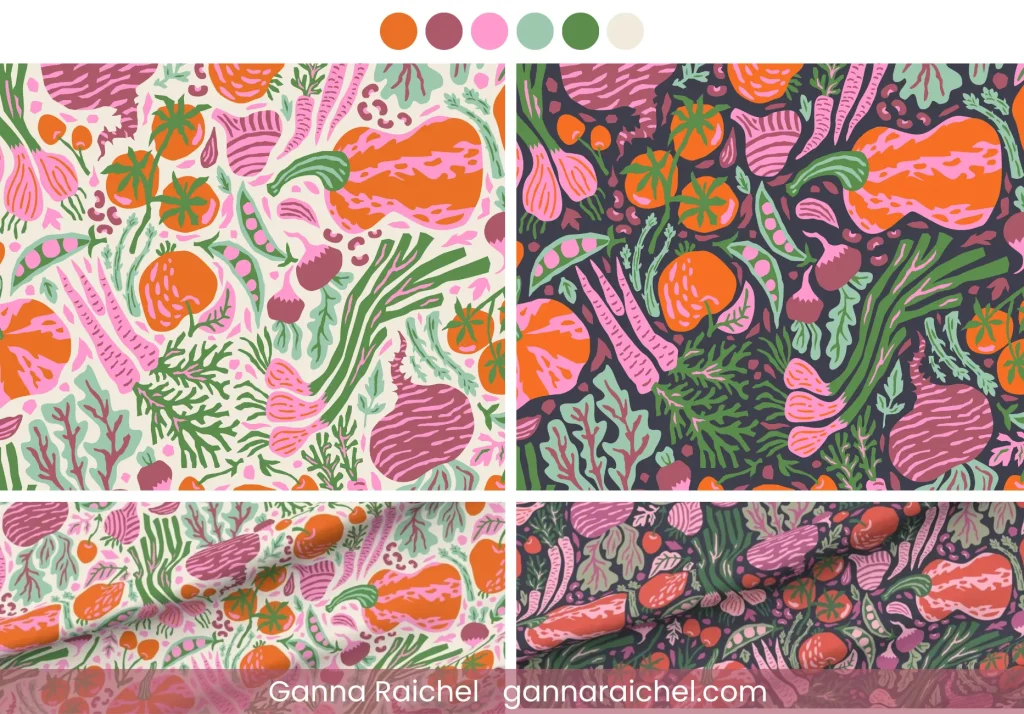
The next step is to digitize all the motifs and convert them into vector formats in Adobe Illustrator.
I like to think of this process as playing with colored paper, from which I sort of cut out the elements I need (using my hand-drawn sketch-pattern as a template).
In this case, the paper is digital—and vector-based, at that. This means that the elements and images created this way can be scaled as needed for any project without losing any quality whatsoever.
That’s how I created my pattern. Like any well-thought-out and well-planned pattern, it works beautifully on both light and dark backgrounds.
After much deliberation, I ultimately chose the light version for this challenge.
A few words about borsch 💝
Although I didn’t set out to do this, it just so happened that—perhaps intuitively—I ended up choosing the very fruits and vegetables that are the main ingredients in the traditional Ukrainian dish, borsch!
There’s beets, garlic, onions, carrot, tomato and beans. And believe me, here in Ukraine, we sometimes make borsch with pumpkin (mostly as a fall dish). And yes, there can be borsch with apples and cherries (here, regional taste preferences come into play).
But the essential characteristics of borsch remain the same: a vibrant color, a rich aroma, and a full-bodied flavor (often with sweet-and-sour notes).
Plus, Ukrainian borsch has been added to UNESCO’s list of Intangible Cultural Heritage.
You can read more here
My pattern took third place!
To be honest, I never even dreamed of something like this.
It was so unexpected—and, of course, wonderful.
And that event really lifted my spirits and inspired me back then, at the beginning of the year.
And I’m so grateful for it!